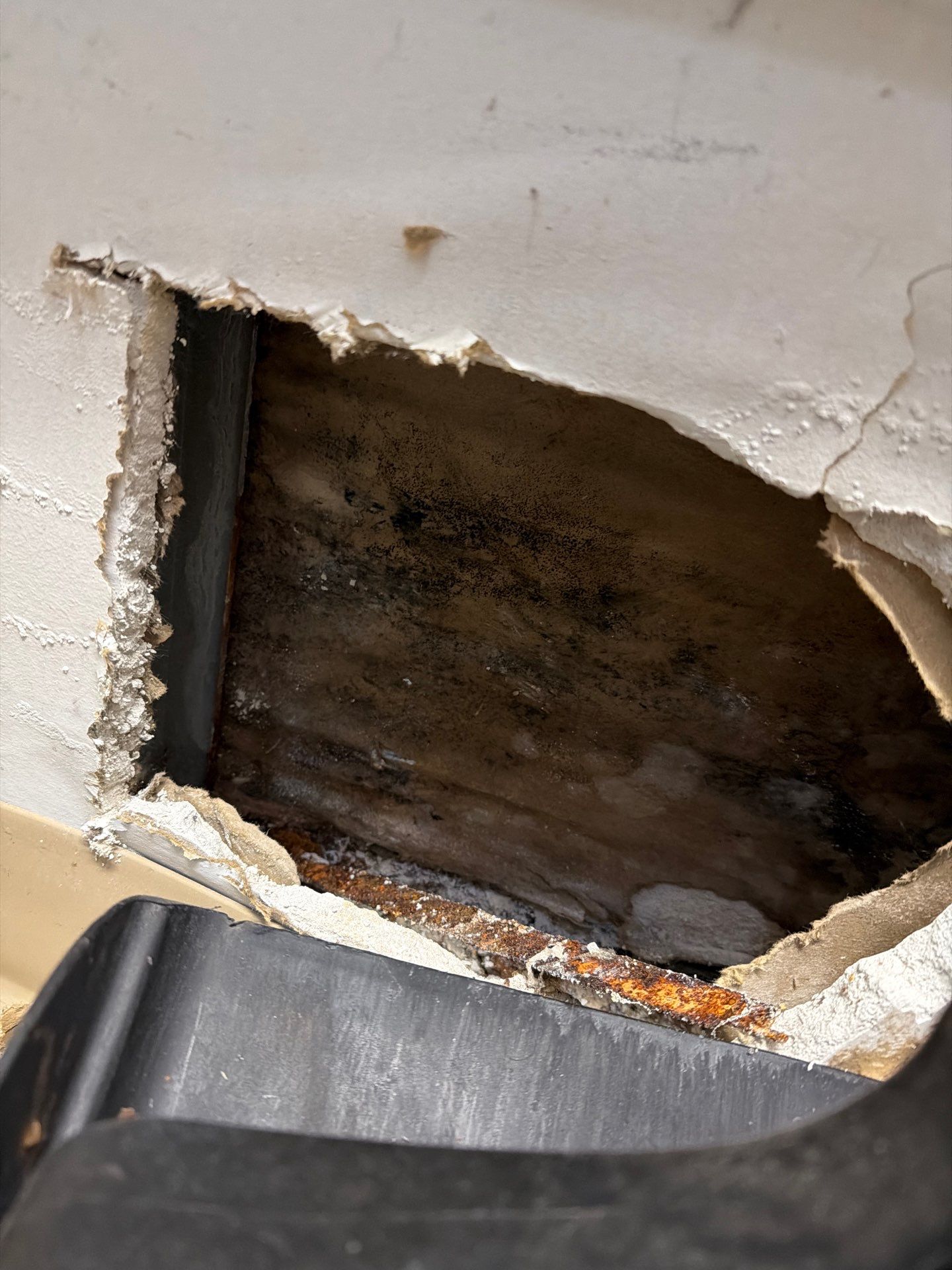
What should you do in the first 15 minutes after a washing machine flood?
Shut off the water first. Behind every washer there are two valves, hot and cold, that turn clockwise to close. If they are stuck or corroded, go to your main water shutoff, usually in the basement near the front foundation wall in older Limestone Springs homes or in a utility closet in newer builds. Then unplug the washer if you can reach the outlet safely without standing in water. If the outlet is submerged or you see sparks, flip the breaker at your panel before touching anything.
Once water is contained, start moving items. Lift baskets, soap boxes, and any cardboard off the floor. Pull up area rugs and small furniture from adjacent rooms. Photograph everything before you move it, including the back of the washer, the hoses, the floor, baseboards, and any ceiling staining in the room below. Insurance adjusters will ask for these photos later, and homeowners who document early almost always see faster claim approvals.
How much water are you actually dealing with?
More than you think. A standard top-load washer holds 19 to 25 gallons per cycle, and a front-loader holds 13 to 17. A supply line that ruptures while you are at work can dump 300 to 500 gallons an hour until someone shuts it off. We have walked into Limestone Springs laundry rooms where the homeowner thought it was a small leak and found water two rooms deep, soaked into the subfloor, with the kitchen ceiling below already sagging. Standing water you can see is rarely the full picture. The water you cannot see, behind walls and under flooring, is what causes secondary damage if it sits.
Second-floor laundry rooms are the worst-case scenario. Gravity carries water through floor penetrations around the drain stack, down inside wall cavities, and across ceiling joists until it finds the lowest point, often a recessed light fixture or an HVAC register on the level below. By the time water drips through a light can, the drywall above it has already absorbed several gallons. We routinely find insulation soaked across an entire bay even when the visible stain looks the size of a dinner plate.
Will homeowners insurance cover a washing machine flood?
Usually yes, if the flood was sudden and accidental. A burst supply hose, a cracked drum, a failed pump that let go without warning, all typically covered. What carriers deny is gradual leakage, the slow drip from a fitting you ignored for months, and any damage tied to lack of maintenance. Document the failure point, save the broken part, and call your carrier the same day. We work directly with adjusters from State Farm, Allstate, Erie, American Family, and most regional carriers serving Limestone Springs. If you want a sense of what claims look like start to finish, our guide on burst pipe water damage and repair costs walks through the same insurance process.
What parts of the house get damaged most often?
Baseboards and the bottom 12 inches of drywall absorb water first because gypsum wicks moisture upward against gravity. Engineered hardwood and laminate flooring swell at the seams within hours and rarely return to flat, even after drying. Particleboard cabinet bases delaminate and sag, while solid wood cabinets often survive if dried quickly. Subfloors made of OSB lose structural strength when saturated, and we usually recommend cutting out and replacing any section that stayed wet longer than 24 hours. In finished basements directly below a laundry room, the drop ceiling tiles and the insulation above them are almost always a total loss, but the framing itself can usually be dried in place.
What does washing machine flood repair cost in Limestone Springs?
Smaller jobs, meaning water extraction and three to four days of drying in a single room, run $1,200 to $2,500. Mid-range jobs with hardwood refinishing, drywall replacement, and baseboard work fall between $3,500 and $7,000. Larger losses that include ceiling repair in the room below, cabinet replacement, or subfloor removal can reach $9,000 to $15,000. Your deductible is usually $1,000 to $2,500, and we bill the carrier directly for the rest on covered claims. We give written estimates before work starts, not after, so there are no surprises when the final invoice arrives.
How do you prevent the next washing machine flood?
Replace rubber supply hoses with braided stainless steel every five years. Install a single-lever shutoff valve so you can close both lines at once when you travel. Add a simple battery-powered leak sensor behind the unit for around $20. Never run a load when no one is home, especially in older Limestone Springs houses where supply pressure can spike. And inspect the drain hose clip behind the machine annually, since a hose that vibrates loose during the spin cycle is one of the most common causes we see. Limestone Springs Water Restoration also recommends pulling the washer out from the wall once a year to look for rust streaks, mineral buildup on fittings, or any moisture staining on the floor behind the unit. Small signs caught early prevent the four-figure repair bill later.
Do you really need a professional, or can you dry it yourself?
If the spill is small, under 10 square feet, on tile or sealed concrete, and you caught it within the first hour, towels and a box fan can handle it. Anything larger, anything on hardwood or laminate, anything that reached drywall or baseboards, and anything that dripped into a lower level needs professional drying equipment. Consumer-grade fans move air but do not remove humidity, and trapped moisture in a wall cavity will grow visible mold within 48 to 72 hours in a typical Limestone Springs home. Our trucks carry commercial air movers, LGR dehumidifiers, and moisture meters that read inside materials, not just surfaces. A full breakdown of our drying process is on our water damage restoration page.
Is washing machine water considered clean or contaminated?
It depends on where in the cycle the failure happened. Under IICRC standards, supply line water before it enters the drum is Category 1, meaning clean. Wash water with detergent and soil is Category 2, also called gray water, and it can become Category 3 within 48 hours if left untreated. Drain line backups or any water that contacted sewage piping is Category 3, black water, and requires full containment and antimicrobial treatment. Our crew tests and categorizes on site, then explains exactly what protocol applies. You can read more about contaminated water response on our sewage cleanup service page if your situation involves drain line failure.
How long does professional drying take?
For a contained laundry room flood with no migration, three to four days. For water that traveled into hallways or down through ceilings, five to seven days. We monitor daily with moisture meters and adjust equipment placement so you are not paying for fans that are no longer doing work. The IICRC S500 standard requires drying to documented dry standard, not just feeling dry to the touch, and we leave readings on every invoice so you and your adjuster have proof.