Why the Type of Crack Matters More Than the Size
When water shows up at a foundation crack, your instinct is to measure the width. That is a reasonable starting point, but it is not the diagnostic that matters most. What matters is why the crack formed, whether it is still moving, and what hydrostatic pressure is doing on the outside of the wall. A 1/16 inch shrinkage crack in poured concrete can leak gallons during a thunderstorm and still be structurally meaningless. A 1/8 inch horizontal crack in a block wall can be bone dry today and represent a serious wall failure in progress.
In Limestone Springs the soil is heavy clay that holds water and expands when saturated. That is the engine behind most of the intrusion we respond to. When the ground around your foundation soaks up a three inch rainfall, the pressure against the wall can exceed several hundred pounds per square foot. Water finds the path of least resistance, which is usually a cold joint, a tie rod hole, or a crack that opened during the first year of curing. If your gutters are overflowing or your downspouts dump within three feet of the wall, you are essentially pressure washing the foundation from above. Our window well water intrusion guide covers a closely related failure mode worth reading alongside this one.
Seasonality also plays a larger role than most homeowners realize. The freeze thaw cycle in Limestone Springs works on existing cracks like a wedge, opening them a fraction of a millimeter each winter until a previously dry crack suddenly weeps every spring. We see a predictable spike in calls during the first sustained warm rain after a hard freeze, and again in late summer when clay soils that shrank during drought are hit with a downpour and the gap between soil and wall lets water race straight down to the footing.
The Comparison That Drives Your Decision
The table below lays out the crack categories we encounter weekly, what causes each, how they typically present, and what the repair path looks like. Use it to frame the conversation with whichever contractor inspects your wall. If someone quotes you a single fix for every crack type, that is a sign to keep calling.
| Crack Type | Typical Cause | Leak Behavior | Structural Risk | Repair Approach | Typical Cost Range |
|---|---|---|---|---|---|
| Vertical hairline (poured) | Concrete shrinkage during cure | Weeps during heavy rain, dries between events | Low | Interior polyurethane injection | $400 to $800 |
| Diagonal from corner (poured) | Footing settlement or point load | Steady seepage, often at floor seam | Moderate | Epoxy injection plus monitoring | $600 to $1,500 |
| Horizontal mid wall (block) | Lateral soil pressure, frost heave | Wet band across multiple blocks | High | Carbon fiber straps or wall anchors | $3,500 to $12,000 |
| Stair step (block) | Differential settlement | Intermittent, follows mortar joints | Moderate to High | Tuckpointing, piering if settling | $2,000 to $15,000 |
| Cove joint seepage | Hydrostatic pressure under slab | Water along entire floor wall seam | Low structurally | Interior drain tile and sump | $4,000 to $10,000 |
| Tie rod hole leak (poured) | Failed plug from original pour | Pinpoint drip, can run during rain | None | Hydraulic cement or urethane plug | $150 to $400 |
Notice how widely the repair cost diverges. A tie rod leak is almost a nuisance fix. A bowing block wall is a five figure engineering project. The water on your floor looks similar in both cases, which is why a proper diagnosis matters more than a quick patch. We have seen homeowners spend $800 on hydraulic cement smeared into a horizontal crack that needed carbon fiber reinforcement. The water came back, the wall kept moving, and the next contractor had to remove the patch before doing the real work.
A second pattern worth flagging is the multi crack home. Older Limestone Springs foundations rarely show just one defect. A 1970s poured wall might have two vertical shrinkage cracks, a tie rod leak, and active cove seepage all at once. Treating one in isolation can shift hydrostatic pressure to the next weakest point, and you end up chasing leaks around the basement for three rainy seasons. Limestone Springs Water Restoration prefers to map every visible defect before recommending a sequence, so you spend your budget in the right order rather than the most visible one.
What Happens Inside the House While You Decide
The structural question is one track. The contamination and drying question runs in parallel, and it has its own timeline. Foundation seepage water is generally Category 1 when it enters, but it picks up soil contact and becomes Category 2 quickly. If it sits on carpet pad, behind paneling, or under stored cardboard for more than 48 hours, mold colonization begins. Our 48 hour mold rule article walks through the biology.
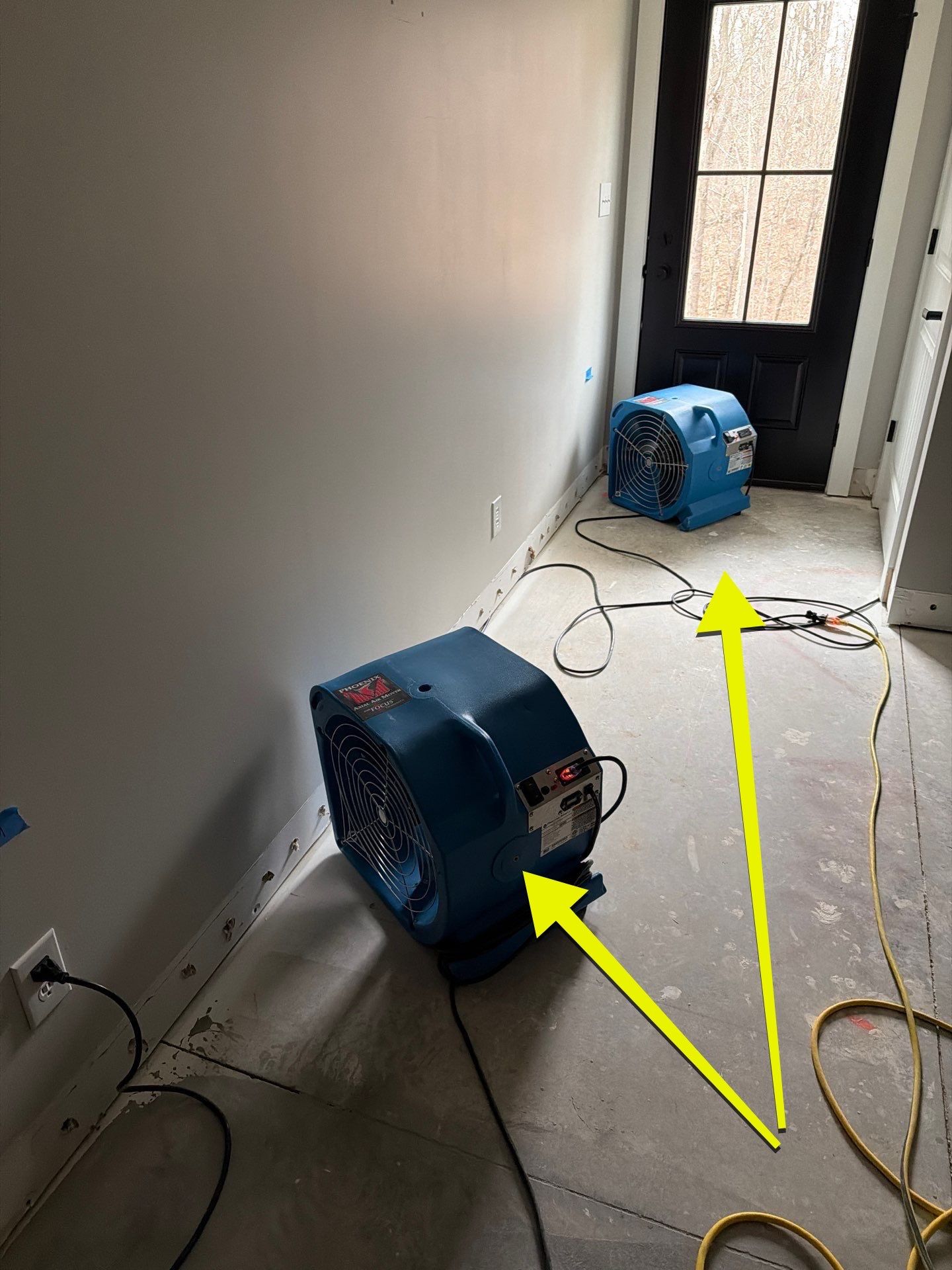
Your immediate steps are practical. Move stored items off the floor. Pull wet carpet back from the wall so the pad and tack strip can breathe. Photograph the water trail before you mop, because insurance adjusters want to see source and path. Avoid running a household fan into a hot wet basement without dehumidification, since you will just push moisture into drywall and joists. If the water keeps coming, get a professional moisture map of the affected area before any cosmetic repair starts. Our team uses thermal imaging and pin meters, and the technique is explained in our basement flooding service overview.
When to Call Versus When to Watch
Not every damp crack needs an emergency response, but a few signs should move you off the fence. Any horizontal crack in a block wall, any crack that is wider at one end than the other, any crack that has visibly grown since you first noticed it, and any seepage that produces more than a quart of water per rain event all warrant a same day call. Limestone Springs Water Restoration dispatches a crew in most cases within 2 hours for active intrusion, and the inspection includes an assessment you can hand to a structural engineer or your insurance carrier without translation.